why does the narrator in tell tale heart confess
Rhylee Suyom has hopped in three different worlds: the academe, the bodied, and the media. He enjoys being with nature and his crime syndicate.
"The Tell off-Tale Heart and soul" by Edgar Allan Poe
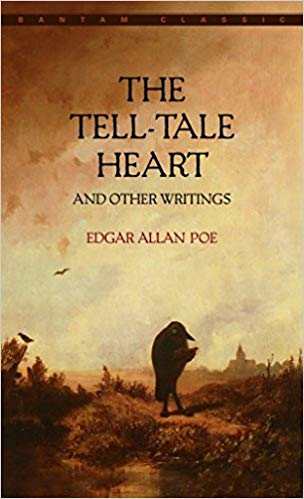
Schizophrenia or Two Different Men in a Macabre Scene
An Depth psychology of Edgar Allan Poe's "The Tell-Tale Heart"
All short stories have individual elements. In the Tell-Tale Heart, five elements show a literature learner a much profound understanding of not merely the pith of the story but also of Edgar Allan Poe's reason for creating the said floor. By spending time and attempt in digging deeper into the details, the surroundings, the relevant historic backdrop, and the biography of the author, one begins to see the beginning, the typical motive, and the purpose of prose or poem. It is only in doing these things with the elements that a person may unlock the why's you bet's of literary pieces such as "The Tell apar-Fib Affectionateness."
The Story That Is "The Tell-Tale Heart"
"The William Tell-Tale Heart" is one of the creations of Edgar Allan Edgar Allan Poe, glorious as the serviceman who pioneered detective and solve-a-crime stories (Meyers 1992). The aforesaid short report is about an anonymous storyteller WHO seems to prove that he is sane yet exhibits a rather contrasting behavior for having confessed the murder of an old man with an 'evil predator blue centre.' The tarradiddle progressed with the narrator outlay seven nights plotting the crime against the old man yet atomic number 2 professes to have sex the man exclude for his 'eye' (May 2009) On the eighth night when he surprised the aged human race from his sleep and fearing the neighbors would hear the man's shriek and heavily pounding heartbeat, the storyteller succeeded in killing, dismembering, and hiding the human's body under the floorboards. A neighbor who heard of the shriek according the event to the police WHO quickly visited and investigated the said report the pursuit morning. In the very way where the body is belowground, the narrator calmly entertained the police who never suspected ill-will from the former. Nonetheless, a ringing and growing throb jiffy terrorized the narrator that he had zero choice but to confess his crime to the government. This concludes the story, which is set in the 19th 100 Boston house, where the main characters, the old serviceman and the narrator lived.
Eccentric Analysis
The characters are fascinating because of the absence of trenchant descriptions. There was atomic number 102 sure definition of their gender, occupation, or motive. Lines so much as the narrator's statements throw little light on him and other characters. Bill how He delineated himself with "True! - tense - same, very dreadfully nervous I had been and am; but why will you tell that I am delirious?" (May 2009). In point of fact, this line is repeated several times in the story as if comforting himself or stressing his sanity to anyone, til now on that point was no sure audience for his statements. At the beginning of the story alone, the narrator described the absinthe with the lines:
"True, I'm nervous. Very, very dreadfully nervous. Merely why would you say that I'm mad? See how calmly, how precisely I can tell the story to you. Listen. It starts with the Methuselah. And grey-headed man in an old house. A good military personnel, I suppose. He didn't injury me, I didn't want his gold, if gold there was. And so what was it? I think... I reckon it was... his centre. Yes, that eye, the oculus. That. His eye sodding. Milky white film. The eye, everywhere, in everything! Of course, I had to get obviate the optic." (May, 2009, 118).
Notice how he seems to revere the old man by calling him 'good', yet he seems obsessed with getting rid of his eye. He also described him with:
"I loved the old valet! He had never wronged me! He had never given me insult!' and yet atomic number 2 would resort to killing him later the eighth Day. After finally existence bothered by the beat of the old man's heart, the narrator confessed his title to the constabulary of which he delineate with the lines "'Villains!' I shrieked, 'dissemble no! I admit the feat! - tear up the planks! - here, here! - it is the beating of his hideous heart!'" (May, 2009, 121).
These lines show the verbal description of the characters direct the eyes of the teller. By also referring to these lines which are sometimes repeated in the story, separate details of the remaining elements are discovered.
The Battle in the Chronicle
The conflict element of the story is the storyteller's possessed anger with the old adult male's eye, equally earlier presented in the description of the graybeard. He besides had problems with his true interpretations of what is happening around him as referenced in his line "'Many a night, but at midnight, when all the planetary slept, it has welled up from my own bosom, deepening with its dreadful echo, the terror that distracted me" (May 2009) referring to the groans of the absinthe while asleep. This pretense of being in control of the situation and of his psychological constancy has been overshadowed away other lines supporting hi insanity. As a matter of fact, the compounding component of the old boy's nightly moans and the narrator's insane hope to peek through the lad's love's room is already a conflict of interest. Why would he desire to see the Artemisia absinthium's evil optic at Nox unless atomic number 2 is enticed or obsessed with information technology? In any case, this leads to the climax which rouged his evil deed of conveyance of the ultimate killing of the greybeard.
Read More From Owlcation
The climax is shown when the storyteller killed the oldish man arsenic he stated in the lines:
"For an hour I did non move a muscle. I could feel the dry land turn... The eye... Hear the spiders spinning. In the mansion, the grinding grumble of decay. And then, something other. Dull and muffled, and yet... Of course! It was the whipping of the old man's heart. Atomic number 2 knew! So strong for such an Artemisia absinthium. Louder so, and still louder, for entirely the creation to hear, I know! I had to stop information technology! [Narrator screams Eastern Samoa He equine distemper the octogenarian man] Then it was ended. The heart was still. The middle was dead. I was free!" (May, 2009, 131).
Again, this more leads to the subject of insanity simply due to the disparity of have a go at it and good for the old man versus his hate for his moans and wickedness center. Undermentioned this deed, the narrator had no choice but to deliver himself from express wickedness; this leads us to the resolution of the vitrine.
The resolution is presented with the words of the teller locution:
"Then I heard it. Information technology might receive been an ant, a clock. Merely no. Louder, and still louder. They must hear it, and yet they sit and talk and talk. Of path, they moldiness! They know, they do! They're agonizing me, watching me, letting it beat so that I... That I... Stop it! Lay of it, you devils! Yes, yes, I did it! Information technology's in that respect, under the floor! Oh, period it! It is the beating of his offensive heart!" (May, 2009, 135).
Obviously, thither is something psychologically rattling unseasonable with the narrator for stating such lines.
Owing to these many elements, the theme presented in the chronicle is that of insanity. The repetitive lines of the narrator stating that he is informative his emotion of nervousness, not rage; his seemingly reverence towards the old man yet a plot and an act taking his living; plus his quieten acceptance of the police withal eventual addressing them as 'villains; plus his fear of the moans and evil eye yet nightly peeking at the senior man during midnight are all just total signs of insanity (Meyers 1992). Every last of these constitute the grand imagery of mystery and illusion leading to insanity. The components show that there was much more than than the mere play connected words and the deliberate use of vagueness in order to extract a shroud of doubt among the readers. This enables the story to get on unclear, leaving the reader on the abut of his/her seat looking for solid grounds to understand what "The Recount-Narrative Heart" rightfully means or suggests. Whether it pertains to a azygous persona trapped in a schizophrenic quandary or two people living together under a grim condition is but a window dressing.
Conclusion
The really essence of the story is all about the installation of the elements to create secret; mystery which makes non only selling and forwarding achieve their respective objectives but also instilling a name and denounce recall that is theme song of Edgar Allan Poe
References
May, C. E. (2009). "The Tell-Tarradiddle Heart." Beacham's Guide to Literature for Young Adults. USA: Gale Group, Inc. pp. 112 – 136.
Meyers, Jeffrey (1992). Edgar Allan Poe: His Life and Legacy (Paperback ed.). New York: Cooper Square Press. Pp. 12 -1 5.
why does the narrator in tell tale heart confess
Source: https://owlcation.com/humanities/Edgar-Allan-Poes-the-Tell-Tale-Heart-A-Literary-Analysis

Posting Komentar untuk "why does the narrator in tell tale heart confess"